
Motorcycle Dash Cam vs Action Camera: What's the Difference?

As a motorcycle rider, the way you capture your rides often depends on what matters most to you on the road. If you have ever considered recording your rides, you may have wondered whether to choose a motorcycle dash cam or an action camera as you might notice that some riders using a GoPro as dash cam instead. Both can record your ride, but the way they operate and what they are designed for are fundamentally different. One focuses on safety, automation, and continuous recording, whereas the other is designed for creative shooting and flexible use. Recognizing these differences, including features such as an easy install dash cam with GPS and loop recording, as well as action cameras built for high frame rates and dynamic footage, makes it easier to choose a setup that aligns with your riding habits.
What is a Motorcycle Dash Cam?
A motorcycle dash cam is a recording system mounted directly on the motorcycle and designed to run in the background during a ride. Once the engine is started, it begins recording automatically without requiring manual input, focusing on capturing a full, uninterrupted record rather than selective moments or creative shots. This continuous recording setup keeps footage running without interruption, while functions like loop recording and event locking prevent important clips from being overwritten. Designed for everyday riding conditions, it is also weather- and vibration-resistant, providing a reliable solution for daily commuting and extended travel.
For a deeper understanding of how a motorcycle dash cam works and why it is essential for daily riding, you can also explore our related article, A Guide to Motorcycle Dash Cam: Why You Need One.
What is an Action Camera?
An action camera is a versatile, compact camera designed for outdoor enthusiasts, sports fans, and travelers who want to share their experiences with the world. It is typically mounted or handheld rather than fixed to a single vehicle, allowing flexible adjustment of positions and angles depending on what needs to be captured. Instead of running continuously in the background, recording is manually triggered and focused on selected moments, with a clear emphasis on content creation and moment capture. This allows for clearer and smoother footage when capturing highlights, scenery, and fast-moving action. Although some motorcyclists use action cameras as substitutes for dash cams, the core design prioritizes hands-on filming, angle adjustments, and short, intentional takes.
Differences Between Motorcycle Dash Cam and Action Camera
Both devices record rides, but their design and real-world use follow very different logic. A closer look at installation, recording behavior, and power setup reveals how these differences affect real-world use.
Installation Method
A dash cam is installed as a fixed system on the motorcycle, with components integrated into the motorcycle for stable, long-term use. Cameras are discreetly positioned at the front and rear, while remote controls are placed within easy reach for quick operation. Once set up, the system stays in place and runs continuously without requiring frequent adjustments. For riders who prefer a professional touch, installation can be arranged through LOOKING’s partner shops or requested as an on-site service.
An action camera allows more flexibility in how and where it is mounted. It can be mounted on a helmet, chest, or handlebar using different brackets, and is easy to attach or remove whenever needed, making it simple to adjust angles on the go. However, this also means it often needs to be set up, taken off, and charged for each ride, which can become gradually inconvenient.
Recording Mode and Features
A motorcycle dash cam follows a “set it and forget it” approach that records automatically without constant attention. Once activated, it continuously captures footage and overwrites older files through loop recording, keeping the recording process seamless. A G-sensor detects impacts or sudden movement and triggers event locking to secure important footage. Additional capabilities, including front-and-rear recording, GPS tracking, and WiFi or app connectivity, simplify access and management of recordings.
An action camera focuses instead on manual control, on-demand recording, and creative shooting. Recording is activated only when needed, giving users full control over when and how footage is captured. It also supports high resolution, high frame rates, and slow-motion shooting, which enhance visual output. Rather than continuously documenting a ride, it is better suited for selecting specific moments, experimenting with angles, and shaping footage with a more intentional, hands-on approach.
Power Supply and Usage Duration
Dash cams are typically connected to the motorcycle’s power system or equipped with larger built-in batteries to support extended use. Once installed, they can operate continuously during daily rides or long-distance travel without requiring frequent attention.
Action cameras rely on rechargeable batteries, which limit their recording time. Riders often need to swap batteries or keep the camera plugged in via a USB cable during longer trips, which can interrupt recording. Furthermore, thermal management is a critical concern; since action cameras are usually sealed for waterproofing, continuous high-resolution recording over long periods can lead to overheating. This may cause the device to freeze or shut down unexpectedly, unlike dedicated dash cams that are engineered for stable, long-duration operation in high-temperature environments.
Usage Scenarios
A motorcycle dash cam works best for daily commuting, long-distance touring, and situations where clear documentation is required. It is particularly useful for recording unexpected events, gathering evidence, and maintaining a consistent record of riding activity.
An action camera fits better in outdoor adventures, travel recording, and visually driven content creation. It excels at storytelling and highlighting memorable moments rather than recording every second of a ride.
Comparison Overview
With a clearer understanding of how each feature functions in practice, the table below provides a side-by-side comparison of a motorcycle dash cam and an action camera, helping you determine which option better suits various riding needs.
Motorcycle Dash Cam | Action Camera | |
Installation | Fixed and wired setup | Flexible and detachable mounting |
Recording Style | Automatic and continuous | Manual and on-demand |
Power | Connected to the vehicle or a large battery | Rechargeable battery dependent |
Usage Focus | Safety and documentation | Creative shooting and storytelling |
When evaluating these options, you should also realize that action cameras typically rely on Electronic Image Stabilization (EIS), which would narrow the viewing angle and mean that an action camera may fail to capture vehicles or objects emerging suddenly from the sides, a critical gap for accident documentation. Plus, the sealed design of the action camera results in overheating and shutdown, as mentioned above.
Which One Should You Choose?
The choice comes down to what you want your camera to do during a ride. A dash cam captures the critical moments of everyday riding that require reliable documentation, while an action camera is designed for the visually engaging moments worth sharing. The key difference lies in whether safety documentation or flexible shooting matters more. If the focus is on recording every moment without extra effort, a dash cam becomes the more practical choice.
For daily riding, long-distance travel, and extended trips, a motorcycle dash cam offers continuous loop recording and integrated GPS tracking. It captures a complete visual record of your journey and route, providing clear support in unexpected situations and enhancing safety and evidence collection. For daily commuting, it offers significant value in real-world conditions. This value becomes even more apparent if you travel frequently or ride in higher-risk environments.
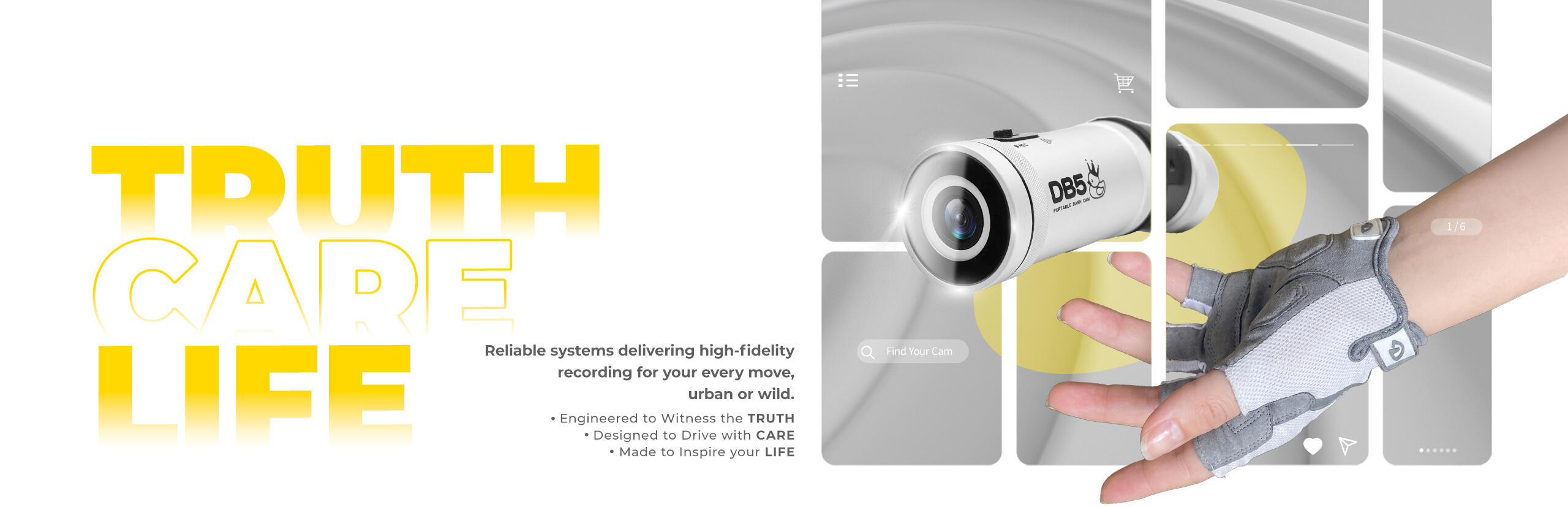
And what about the combination of a motorcycle dash cam and action cam? Is it possible? Yes, LOOKING thought about it, so we designed the World-First Dual-Lens Helmet Dash Camera in 2019 - the DB series. Easy DIY installation and user-friendly mounting, with the core features of the dash cam are kept. Know more: How to Choose Motorcycle Helmet Cameras: A Buyer’s Guide
Conclusion
A motorcycle dash cam and an action camera serve different roles on the road and are not meant to replace one another. Choosing between them should be based on actual riding needs rather than a simple comparison of specifications.
For riders who prioritize reliable documentation and everyday protection, a well-designed dash cam provides a more dependable solution. Products like our motorcycle cameras are the best choice due to their reliable functionality and long battery life.
For body-worn or cycling use, LOOKING’s Camera with LED Safety Light, a 2025 Golden Pin Design Award winner, offers stable recording with versatile mounting options such as a magnetic body mount. This allows quick and flexible placement beyond fixed setups and supports daily use as well as extended rides.
If you are looking for a dependable recording solution or would like to learn more about installation and product options, feel free to contact us.